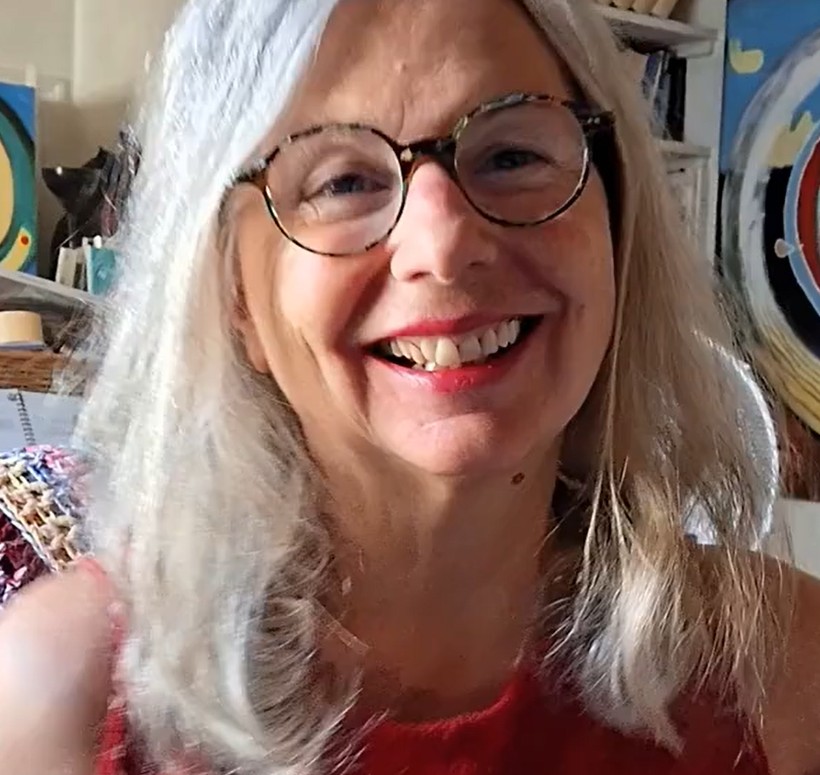
In Alina Reyes’s writing, the body emerges as a territory where questions of freedom, power, vulnerability, and resistance acquire their most tangible expression. Her exploration of eroticism opens onto much larger philosophical and political questions: the autonomy of the individual, the mechanisms through which society disciplines desire, the relationship between the intimate and the ideological, and the possibility of preserving inner freedom in the face of external authority. Her work also possesses a profound existential dimension, insisting on the indivisibility of intellectual, physical, and spiritual life. Reyes’s writing suggests that the struggle for freedom begins precisely where power attempts to establish its jurisdiction over the most private dimensions of human existence. For her, even the act of writing becomes inseparable from this struggle, a form of intellectual and existential self-determination.
AP You left school early, married, then returned to study and wrote on Marcel Schwob’s fantastic tales. How did that double movement, out of education and back into it, shape your sense of who gets to speak, and what did Schwob’s “imaginary lives” teach you about the relation between invention and biography?
Yes, I returned to my studies at the age of twenty-seven, after the birth of my first two children. I first studied journalism, then completed a postgraduate research degree (DEA, now equivalent to a second-year Master’s degree) in Comparative Literature, on the theme of the double in Schwob, Stevenson, and Borges. Schwob admired Stevenson; Borges admired both Schwob and Stevenson. Comparing their works means studying the circulation of fictional thought, exploring forms of thought that express themselves through fiction and become metaphysical.
This reflection also led me to adopt a pen name taken from a short story by Cortázar, “Lejana,” whose protagonist is named Alina Reyes and meets her double on a bridge, after playing with the letters of her name to form the anagram Es la reina y… This, too, is a metaphysical story, and it expresses my relationship to writing as well as to life: I invent my life, and from it I invent imaginary lives. Then those imaginary lives come back to visit me in my own life; things I had imagined happen to me without my having sought them out. This is because language, if you marry it, already knows the events and metamorphoses that are to come.
Alina Reyes is the name of my language, and it is alive, even if it is killed. There is something of Monelle in this, Schwob’s character who escapes temporality.
Much later, in 2018, I finally defended the doctoral dissertation in Comparative Literature that I had wanted to write before the success of my first novel carried me down other paths. That work, on the question of inhabiting the world, unfolded across an immense span of time, from Prehistory to the present day, through a linguistic and symbolic labyrinth.
AP You are best known for treating eroticism as a serious literary subject. When desire enters a novel, what does it reveal about social relations that other registers hide: class, property, power between the sexes?
Everything. It reveals everything.
I once recounted somewhere how a fellow student, who was studying medicine, jokingly threatened to throw me from the bell tower of a ruined church he had taken me up to when I was a teenager. His tone was both playful and threatening. “No one would ever know,” he said of the crime he was dreaming of committing, there, when we were alone, far from everything, and when he really could have pushed me into the void without anyone being able to prove it.
And I said: that is what a free working-class girl inspires in the bourgeoisie.
AP A great deal of erotic literature has been written by men for men. What changes structurally, in point of view, in who looks and who is looked at, when a woman writes the scene?
I don’t know. I cannot assign a gender to literature, because when I write, I have no gender.
Many women writers have written like men because we have mainly had literature written by men to read. So we often find patriarchal gender stereotypes in erotic literature written by women, whether in Story of O or Fifty Shades of Grey.
One characteristic of fantasy is that it likes to be shared. It is therefore commonly shared across genders, but unfortunately often to the detriment of women.
That is not the case in my erotic literature. Women are sovereign and active, not because I decided they should be, but because that is how I am.
AP The title Poupée, anale nationale plays with the nation, the doll, and the body. How do you think about the way states and markets invest in bodies, and what does it mean to use sexual language against national myth?
This is precisely a very patriarchal image of womanhood. One that I denounce. This woman who keeps saying myhusband. And who is reduced to the role of a doll, hence her delirium.
This woman reflects men and women who have been reduced to the condition of dolls, by society or by themselves, reduced to the anal stage, as Freud described it in very young children. A human being without thought, governed by morbid affects, by hatred, by the inability to accept the other as other.
The book’s scatology recalls that of Pasolini’s film Salò, itself inspired by Sade. What is at stake is the excrement that has invaded the fascist or fascistic mind, whatever the cultural or social standing of the people it takes hold of.
This is not sexual. It is a falsification of sexuality through crime and death.
The publishers who rejected this text were afraid of something buried deep within themselves. I dig up what needs to be dug up. That is my work. Afterward, I pay the price, because people want revenge for it. But so be it.
AP Your essay Politique de l’amour places love and politics side by side. What would a politics of love have to refuse, and what would it have to build, so that “love” does not become an ornament for existing hierarchies?
This essay is actually a collection of columns previously published in newspapers. I haven’t reread it; it is an old book, and I think I would see certain things differently today.
But what does not change is that love is profoundly political. If you want to know how honest and trustworthy a man or woman in power is, look at their private life (which they try to hide, and for good reason).
I have no political trust whatsoever in someone who advocates, for example, “liberty, equality, fraternity” while living in relationships full of restrictions, deceit, and abuse.
Politics is a very primitive activity, an activity of apes. Among our ape cousins — bonobos, other chimpanzees, or gorillas, for example — we can see how sexual relationships govern the politics of the group in different ways.
Politics governs life and relationships within the polis, the city. And the first city is the couple. Then the family.
The way we raise our children is also eminently political, and reveals our real conception of how life in society should be organized far better than speeches, which are so often deceptive.
AP Desire is now sold: apps, advertising, an economy of attention built on longing. Does literary eroticism still disturb anything when the market has learned to speak the language of desire fluently?
Apps and advertising are two very different things. The expression of desire has emerged from taboo, and that was necessary.
Perhaps there is no longer much need for erotic literature, and I don’t mind. There was a need for it when I wrote it; perhaps there will be a need for it again later, or elsewhere.
Eros is less afraid of coming out in all its forms. He is probably less miserable now than Plato lamented he was, and all the better for generations who no longer make such a complicated business of it.
I helped dig up that poor little god whom centuries of religious power had buried alive!
AP Several of your books circulate between novel, essay, and poem. What does each form let you do with the body that the others forbid?
When I write, I make no distinction between the different genres. I inhabit them all and move through them all at once.
In my novels, some passages resemble essays, others fiction, others autobiography. Everything mingles in “the great poem of the sea” in which Rimbaud bathed.
AP Your diary Ma vie douce covers two decades, 1979 to 2000. What is the relation between the diary and the novels: is the diary a laboratory, a counterweight, or a work in its own right? And what does it mean to publish a life in installments?
It is always a matter of writing.
Let’s say that when I write my diary, I walk. When I write a book, I run.
And it is always step by step, or stride by stride. We breathe in, we breathe out; sometimes our breathing is calm, sometimes powerful, panting.
I don’t think in tactical terms. I live what I do according to what each moment calls for, and I respond to it as accurately as I can.
AP In La Vérité nue, you wrote with Stéphane Zagdanski. What happens to authorship, to the idea of a singular voice, when the work is built from an exchange? Did the collaboration change what you consider “yours”?
Not at all. Each of us had our own words, our own clearly distinct voice.
AP Lilith carries a figure from myth who stands for the woman who refuses subordination. What draws you to rewriting founding stories, and what is at stake in telling them again from the position of the one who was cast out?
Precisely to give a voice to those who had none. And when I say “those,” I am not speaking of real people, but of characters, symbolic figures.
Some symbolic figures do not speak enough because they are not allowed to speak. Or because they are left frozen in outdated interpretations.
I have done the same thing when translating and analyzing certain passages of the Bible or the Quran, and now in translating Homer. These texts are overflowing with words that have not yet been spoken, and those I hear within them, I want to speak.
AP Your early work was welcomed and also attacked. What does the reception of a woman’s erotic writing reveal about the boundaries a culture polices, and did the scandal ever become a form of capture, a brand you were expected to keep performing?
I care relatively little about the reception of my books, ever since I understood, with my very first novel, that what mattered most in it remained misunderstood.
When you write, you must trust in the long timescale of the written word, longer than that of our own lives. The same is true of works of art: it often takes a very long time for them to be understood.
What is immediately understood is quite likely to disappear very quickly.
AP You have said you stand apart from the publishing milieu. What does independence cost materially, and what does it give you that a house, an advance, and a publicity budget could not?
In fact, it was the publishing world that pushed me away.
First, because I detested it, with all its scheming, and only went near it long enough to hand over my manuscripts and sign my contracts. Then, because it was all the easier for that world to eliminate me once I began to disturb it too much.
It cost me enormously. I had to sell my house, I nearly lost my apartment through eviction, and for many years I was unable to earn a living.
A very influential publisher whom I had displeased had promised to ruin me, and he kept his criminal promise, causing suffering to my family, especially my children.
Eventually I found a job, but it was so exhausting that I became seriously ill.
Now I am retired, and I no longer need to publish in order to live.
This is the Western way of censoring authors and sending them to the “gulag.”
AP Your online journal makes writing available without a publisher as intermediary. Is the digital space a commons for literature, or another enclosure with a different landlord? How has it changed your sense of audience, and of what a finished work is?
Many authors have left unfinished works, manuscripts in disorder, revised, rearranged, or still waiting to be rearranged.
Literature is not the book industry. It can be written on any medium.
Political prisoners have written it on scraps of paper, on matchboxes…
AP Your books have been translated into many languages. What survives in translation, what is lost, and what do you think happens when a French erotic text enters cultures with other taboos?
You seem to think that I have written nothing but erotic literature. That is not the case.
Foreign publishers are free to choose which of my works they wish to translate, depending on the readership they address.
I am a translator myself, and a reader of translations. I know that it is impossible to render the exact equivalent of one language in another.
And I believe I have had some good translators, even if it is impossible for me to judge all the translations.
AP French has a long tradition of treating literature and philosophy as one conversation, and you have written about love in essay form. Do you think the Anglophone world misreads that tradition, and is something produced by the way it is imported?
I have no opinion on the matter, except that the Anglophone world tends to be closed in on itself.
Europe is more interesting and more open because of the plurality of languages and minds circulating within it.
AP After decades of writing, what do you still not understand about desire, and what would you like a novel to be able to do that you have not yet managed?
Nothing. I have never felt that there was anything about desire that escaped my understanding.
AP You say the publishing world pushed you out once you began to disturb it. Can you reconstruct, concretely, how that works from the inside: who decides, through which channels (contracts, reviews, prizes, word of mouth), and how does a writer discover that she has become unpublishable?
All I could observe was that nobody wanted to publish me anymore, either in publishing houses or in the media. And yet I had published extensively with various publishers and in various newspapers for twenty years. At first, I tried contacting other publishers. They would immediately offer me a meeting, but when I replied, I would never hear from them again. Someone I knew who worked in publishing told me there was a campaign against me. Others had told me about malicious gossip concerning me. It’s a small world, and it’s all the easier for them to carry out their schemes when they’re dealing with someone like me, who has no involvement whatsoever in that world, which I detest, and has no connections there.
AP You called what happened a Western way of censoring authors and used the image of the gulag. Censorship usually brings to mind a state ban. What does it look like in a society with no official censor, where the instruments are money, access, and reputation? Where do you see the resemblance to the older kind, and where does the comparison break down?
The difference is that censorship is now carried out with extreme hypocrisy, as though it didn’t exist. It is even more unjust than in the days when it was imposed by law. At least then it had to justify itself, to give a reason (whether good or bad is beside the point). In our society, censors operate behind the scenes and remain concealed; often they even present themselves as champions of freedom of expression.
AP You took a job so exhausting that it made you seriously ill. What did it teach you about the relation between wage labor and the time that literature requires?
I worked for wages continuously from the age of twelve (during the two summer months), and then year-round from eighteen to thirty-two, until my first book became a success. And by the age of twenty-four, I already had two children, whom I raised on my own for part of the time. So I know what it involves. But writing is no easy task either. It demands a considerable effort. What exhausted me later was returning to a teaching job that involved between three and four hours of commuting by public transport every day, when I was already over sixty.
AP You say that, in retirement, you no longer need to publish in order to live. In effect, a public pension gave you the material freedom the market took away. Does that point toward guaranteed income, public support for writers, or something else? What would literary culture look like if every writer had that freedom at thirty rather than later in life?
Retirement should not be confused with a guaranteed income. I am not at all in favor of a guaranteed income for writers. Unless, one day, such an income is guaranteed equally to everyone because fewer and fewer workers are needed. I have always felt free when working to earn my living, whatever the job. That is precisely what freedom means: earning your own living. I earned a fairly good living from publishing, and I chose my publishers according to my books and also to the royalties they paid. Some people resented that freedom and subsequently defamed me because of it, the bourgeoisie always taking revenge on those who refuse to let it rule over them.
AP You remind us that people have written on scraps of paper and on matchboxes, and that literature is not the book industry. What does that tell us about writing as something no industry can fully own, and which practices today (online journals, small presses, freely shared translation, readings) carry that tradition forward?
That was the subject of my doctoral thesis: writing as a way of inhabiting the world. I believe human beings have always written in order to inhabit the world, even before writing existed. Humans in the distant depths of prehistory engraved signs on rocks, and no doubt on other surfaces too. Very young children draw lines in the sand. Today, street artists paint lettering along railway tracks, in more or less abandoned places… It is a way of declaring that human beings are here. The internet is also an excellent medium for writing, and at last writing is no longer reserved for an elite: it is becoming once again something intrinsic to ordinary human beings. Those who believe otherwise are really only lamenting the loss of their monopoly over writing and speech.
AP You are translating Homer, and you have worked on passages of the Bible and the Quran, reading them against inherited interpretations. That kind of translation is slow and often unpaid. Who is it for, and is it also a way of refusing the tempo the market sets?
I returned to Ancient Greek and learned Hebrew, then a little Quranic Arabic, so that I could see for myself what these texts contained and translate some of them — which also involves a personal interpretation. I did it, and still do it (with Homer), out of pure intellectual and spiritual interest. My work will always serve some purpose, whether it is published or not. And doing this work brings an extraordinary happiness.
AP You did not set out to become anyone’s example, yet writers who are punished for disturbing the powerful may read your story as a warning. What would you tell a young writer who wants to stay free about protecting herself materially: how to organize, what to refuse, what to build with others?
I have no advice to give, because I would rather find myself in difficulty because of my independence than live comfortably thanks to dependence. Do you know La Fontaine’s fable The Wolf and the Dog? What seems more precious to me than anything else is preserving one’s freedom.
AP If you could redesign one institution of the literary world (the publishing house, the prize, the review, the grant, the bookshop) so that a writer like you would not be pushed out, which would you change first, and how?
In France, publishing suffers both from the power of increasingly monopolistic publishers and from public institutions riddled with cronyism. All these people are enemies of literature.
AP You say a writer must trust the long timescale, because what is understood immediately is likely to vanish quickly. Does that mean an economy built on the immediate structurally punishes work that needs time, and does it ask writers to subsidize the long term with their own lives?
In fact, it is entirely possible for great authors to be understood during their lifetimes. Literary history proves it, even though it is also rich in counterexamples. But for that to happen, publishers would have to behave decently and stop offering readers books designed to dumb them down, just as a television CEO once spoke of the “available human brain time” that a commercial television channel like his was supposed to exploit. As recently as the beginning of this November, a prestigious prize was awarded to an essay on the Odyssey which turns out, on reading it, to be a children’s book, presented and sold as a book for adults. By systematically teaching book buyers to forget how to read, publishers are making access to genuine literature impossible.
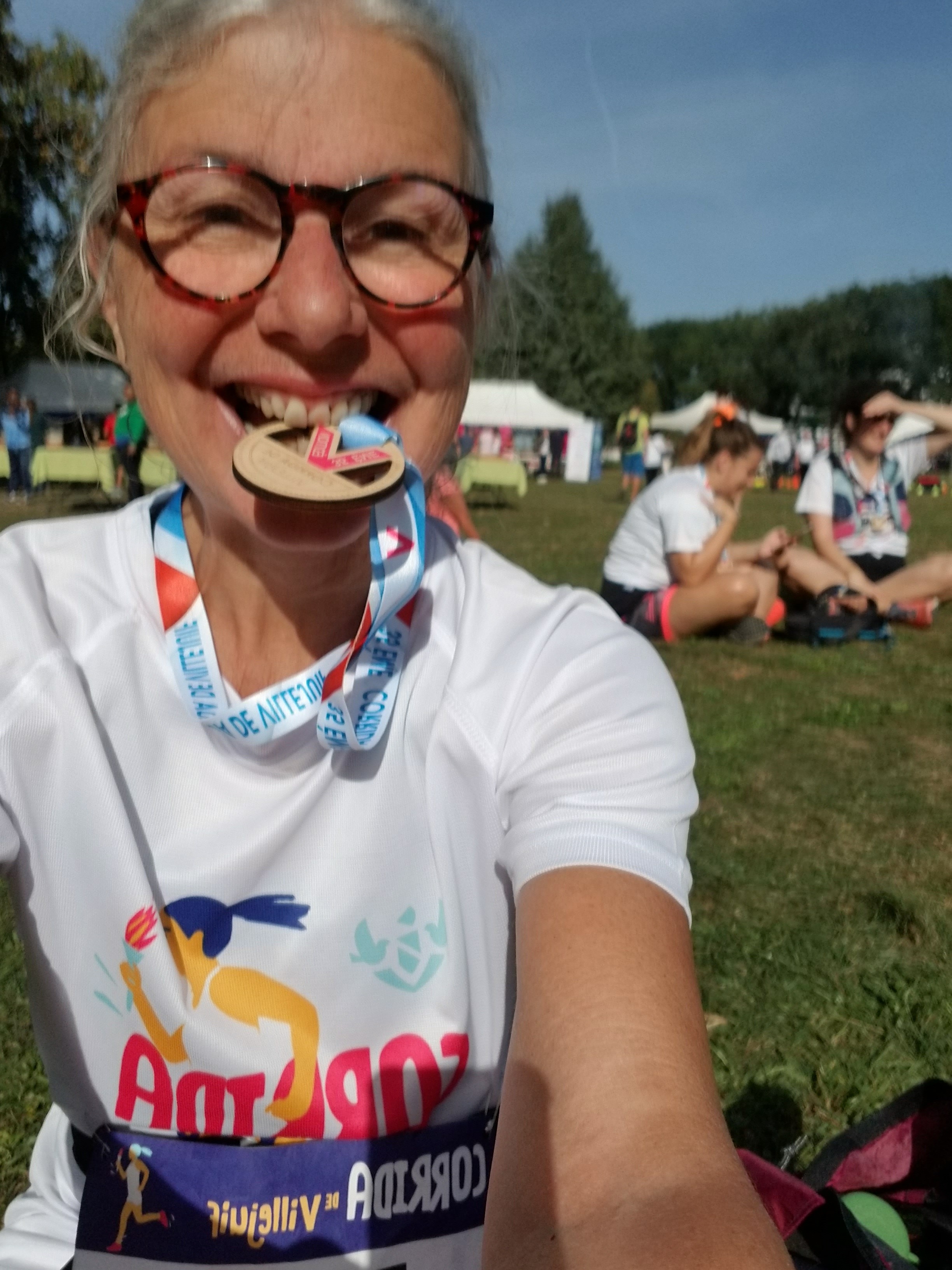
AP You spend part of each year running and cycling across Europe, partly out of ecological concern, living modestly and outside the literary scene. Do you see that way of life as a form of dissent in its own right, and would you offer it as a model for other writers?
I don’t want to offer any model. Everyone lives in their own way. But one thing is certain: keeping company with a rotten world makes people rotten.
AP You say that the women in your erotic literature are sovereign and active, and elsewhere you describe what a free working-class girl inspires in the bourgeoisie. Is eroticism, in your work, a way of claiming a body that class and property relations treat as something to be owned, policed, or used? What would sexual freedom mean for someone who has to work for a living and does not own her own time?
Working to earn your living means being free. Sexual freedom is part of freedom. Women must earn their own living and be independent if they want sexual freedom. They must not depend on a man, as in the bourgeois system, where they are brought up with the idea of making “a good marriage.”
AP You say the expression of desire emerged from taboo, that this was necessary, and that you helped dig up a god whom centuries of religious power had buried alive. Yet the same freedom is now sold: intimacy and bodies circulate as products, and sexual labor is often precarious and underpaid. How do you tell the liberation of desire from its commodification, and what would it take for sexual freedom to be shared collectively and not bought one person at a time?
The commodification of bodies is the oldest profession in the world, as they say. And when I speak of commodification, I am thinking first and foremost of those who make themselves buyers of bodies. Nothing new under this miserable sun. Even so, this is not the general rule. The bourgeoisie is the class most entangled in problems of sexuality, for various reasons, including religious upbringing and an essentially commercial relationship with the world, in which human relations are governed by greed, social competition, and the desire to exploit others. All of which does a thoroughly ugly job of destroying the grace of amorous desire. For my part, I have always preferred working-class men.