The enormous tragedy of the dream in the peasant’s bent shoulders
Ezra Pound
AP Your writing seems to exist in a productive tension between literary experimentation and an acute awareness of material life. When you begin a piece, what usually comes first for you: an image, a sentence, a rhythm, an intellectual problem, or a particular experience that refuses to leave you alone?
You ask good questions. Unfortunately, I have few words to respond. I write utterly from a visceral perspective. I wrote with no conscious motive, idea, or even aspiration. I write from a Joy that builds up in me, and when it finally becomes more than I can keep in, then I reach for a pen and paper. I have never written for money. I have only written from the glands. From eternal rebellion which is a strange nostalgia.
AP What does your writing allow you to do that theoretical discourse cannot? You have spent considerable time reading and thinking through Derrida, Artaud, Isou, Beckett, and other radical writers. What happens when those intellectual concerns have to become sentences, rhythms, images, and structures in your own work?
All those writers have occupied my thoughts and being for decades, and even now at my age I am still in a sense under them. Ideas, say in the case of Derrida, I cannot fathom. I read for orientation, for a personal visceral, even sexual, vorticism. Each of them is an essence of being that inhabits me. Yet, in the deeper throes of my impassioned, viristic anti-writings, they must be overthrown, as all established monoliths must, you must purify yerself to the point of absolute stillness, absolute anatta, anicca, ahimsa, total sunyata.
AP Do you think of your literary practice as avant-garde? If so, what does “avant-garde” still mean to you in a literary culture where many of its once-radical techniques have become institutionalized and academically respectable?
No, I do not see anything I’ve written as classifiable. I like the word, avant-garde. I like the way it sounds. I like the concept of its meaning, that is, to get there first. It is better to start something than to get there after the first person and then you have to conform to their system. Some of us are incapable of learning something other than what we have posited, other than what we are.
I can learn only what I already am. Anything other than I, is incomprehensible and an assault on being itself.
AP There is often an assumption that experimental writing is politically radical simply because it breaks formal conventions. Do you believe formal innovation is inherently political? Or can formally difficult literature reproduce the same class exclusions as conventional literature?
I think as any good soul thinks, that all systems (formal conventions) slaughter the individual they subsume.
AP Your work raises the question of whether language can actually escape the social structures that produce it. When you deliberately fracture syntax, disrupt narrative, or place different registers of language against one another, are you trying to liberate language from inherited structures, or to expose the impossibility of such liberation?
You know as well as I do that all systems butcher their beholders. Language is a system, therefore it enslaves. Which is why I’ve written that the ultimate poet is without poetry, without words. On the other hand, my own work is my only friend, my only loneliness that finds its rightful home in the double flesh of the Void.
AP How important is readability to you? Do you see the reader as someone you owe a certain degree of hospitality to, or does the reader sometimes have to work against the text — to become disoriented, frustrated, or even excluded — before another kind of reading becomes possible?
One reads only oneself. The first and final and only reader.
AP What interests you about the relationship between the body and language? Is the body, for you, something language represents, or is it something that disrupts language — something that enters the sentence as pain, rhythm, desire, limitation, memory, or physical presence?
The Body is everything, good, bad, and something else. And you carry it with you through eternity.
It is frightening to have a body, and eventually all bodies go bad. Existence should not be, but is. And we are with flawed bodies for we don’t know how many trillions of years and rebirths.

AP How conscious are you of class when you are actually writing? I don’t mean whether you write “about” class, but whether your consciousness of where you came from enters the sentence itself — its rhythms, vocabulary, images, assumptions, or resistance to certain forms of literary refinement?
Very good question. I am always conscious of it because we are all indelibly marked by what station we spend our first years of life in. However, reading does mentally in any case, dissipate the way class might unfold on the page. But, as I say, you can never escape who you are and who you are was forged by age 5.
AP Has your movement from a poor Southern background into the MFA and literary worlds changed the way you hear your own language? Do you ever find yourself editing out traces of your earlier linguistic or cultural environment because they seem “incorrect” according to literary conventions you subsequently learned?
Another good question. I certainly did when I was much younger. Certainly. I wanted to supplant my actual past with the books I recently encountered.
However, by attempting to live in the books that possessed me, and attempting to suppress my actual life, well, the result was wonderful actually because it just made my work stranger and stranger, more incomprehensible, more deformed and unusual, more perfect.
AP What do you think is lost when a writer becomes too fluent in the language of literary institutions? Can literary education give a writer greater formal freedom while simultaneously teaching them which kinds of speech are considered legitimate?
I think ultimately genius will always find a way to outmaneuver those formal literary barriers we call institutionalized literary education. Especially today: reading itself is now an actively riotest act, and writing is almost off the scales for the average human being especially in America. Dogmatism, grammaticism, optimism, these will utterly perish in the wake of Reality.
The true artist will always outlast all the rest.
AP I am interested in the relationship between poverty and aesthetic experimentation in your work. American literary culture often assumes that experimental art requires a certain degree of cultural and economic security. Do you think material precarity can produce forms of imagination that institutional literary culture has difficulty recognizing?
It’s like this: the more one is excluded, the further out he/she/it has to go in order to balance the wobbling pivot. Think of all the great readers in prisons!
Reading is the ultimate act of both freedom and negation. The ultimate free individual probably transcends the need for literature, but most of us have not reached that level of enlightenment.
Still, I am a STRUCTURALIST; you are determined by where you are and what’s happening to you. But also, I’m a PHENOMENOLOGIST, and spontaneously a great poem can be born out of the most forbidden and unlikely places. Me.
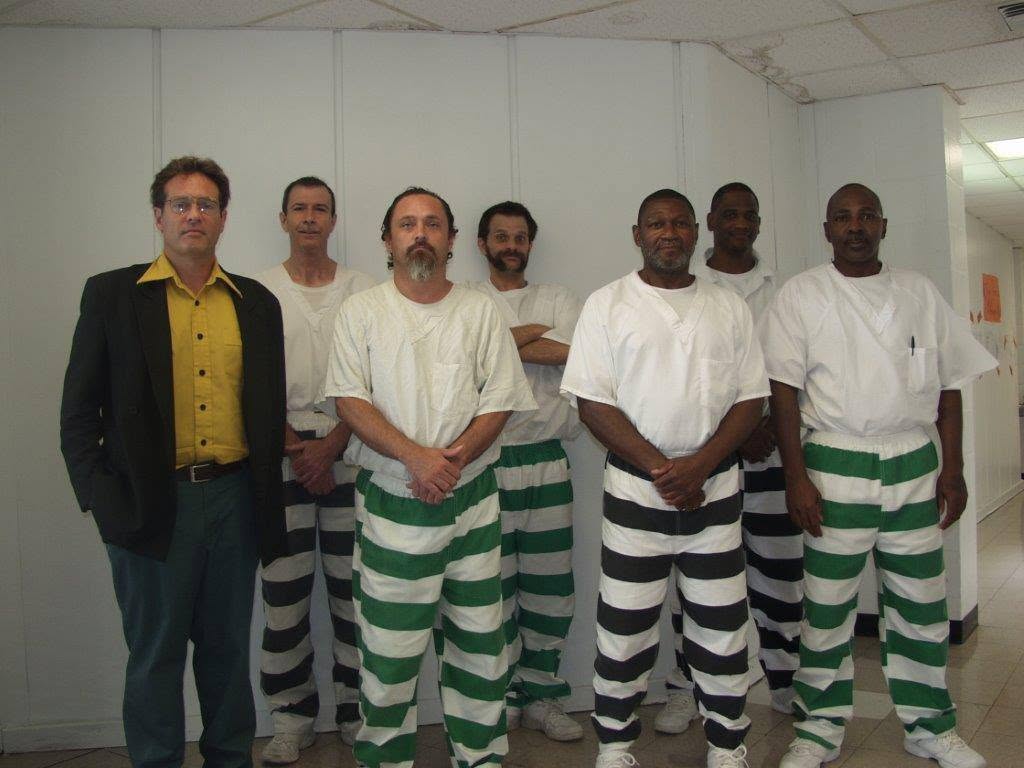
AP Pierre Bourdieu described the literary field as structured by different forms of capital — economic, cultural, and symbolic. You were the first graduate of the University of Mississippi’s MFA program in Creative Writing, yet much of your subsequent literary and publishing work has developed outside the dominant New York publishing networks. Have you experienced your career as a form of resistance to the accumulation of literary capital, or simply as a different route through the literary field?
Bourdieu is correct, as is Marx’s critique of capitalism. However, Economic reality can be the very force that can also push us beyond the restrictive logic of the monetary system. In that way, perhaps, POVERTY IS LIBERATION. If you can break from the formidable modes of CONFORMITY. In the present day, writing poetics on your own without the magnificence of robots, yes, what greater act of REVOLT could there be? Hidden under every human page is a COBRA staring back at you with the eyes of god.
AP Do you think the contemporary literary marketplace has developed ways of absorbing experimental writing without being threatened by it? Has the avant-garde become another genre that the literary industry knows how to package, teach, sell, and eventually canonize?
Though you will lose, you must fight to the end anyways. And of course, you could also win. Yes, the bourgeoisie is a crafty, nasty, unethical, and ugly creature: it has a great penchant and talent in absorbing its opposition, and destroying it simply by showing kindness.
Learn to not live in its world if you can.
AP Addiction and intoxication appear in some of your writing without necessarily being framed through the conventional language of recovery or redemption. What interests you about writing the body in states of intoxication, dependency, or altered consciousness?
You are astute! Nothing in literary art, of course, is of any interest if there is redemption. Look at Burroughs’s great work on ADDICTION, his non-fiction narrative, Junky. He never compromises himself by regretting his addiction (all the while writing about the horrors of ‘junk sickness’). And at the end of that narrative, there isn’t redemption so much as a momentary becalm-ness brought on from being off junk for several weeks. In all matters literary, you mustn’t shy away from the truth, even if it’s you making it up.
I myself have had wonderful morphine-induced dreams that still hold me in a trance decades later: a broken deer antler, a child as soft as Satan, my father walking away from me legless, distant moons, voices in the water, etc.
But not once have I ever hallucinated while awake. Would love to have a genuine hallucination. Sartre once paid a doctor to give him mescaline so he could experience a hallucination.
Sartre’s response: it was weird and I didn’t like it!
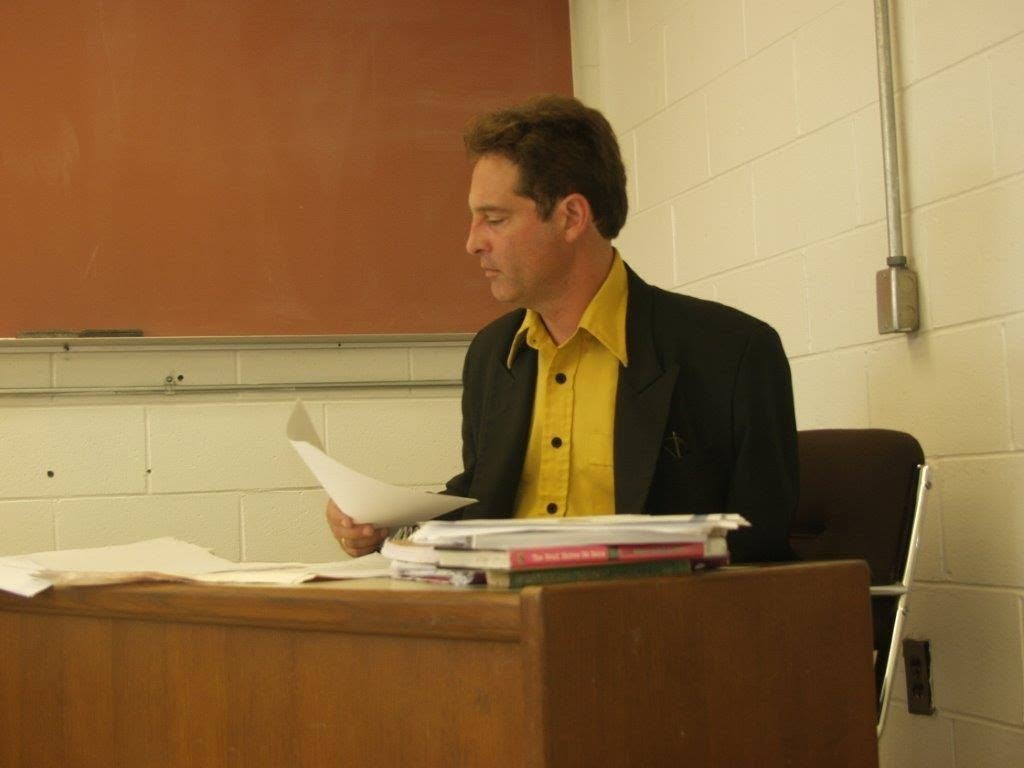
AP You have spent many years teaching and working with writers inside Mississippi’s prison system, including at Parchman. When you bring experiences of incarceration, deprivation, and violence into literature, how do you think about the tension between formal beauty and the risk of aestheticizing suffering?
Yes, I too am exploiting other people’s experiences. Experiences that are not my own. It’s like I’m seeking something I’ve lost every time I go into a prison. There is much contradiction and hypocrisy in a Mississippi prison. Each and every one of us created that prison, in which we will house ourselves as well as the others.
It is in incarceration that you see REALITY (you see truly how evil the BOURGEOIS world order truly is). It is no mystery at all to me why spree shootings occur. I’m only surprised that so few of them happen.
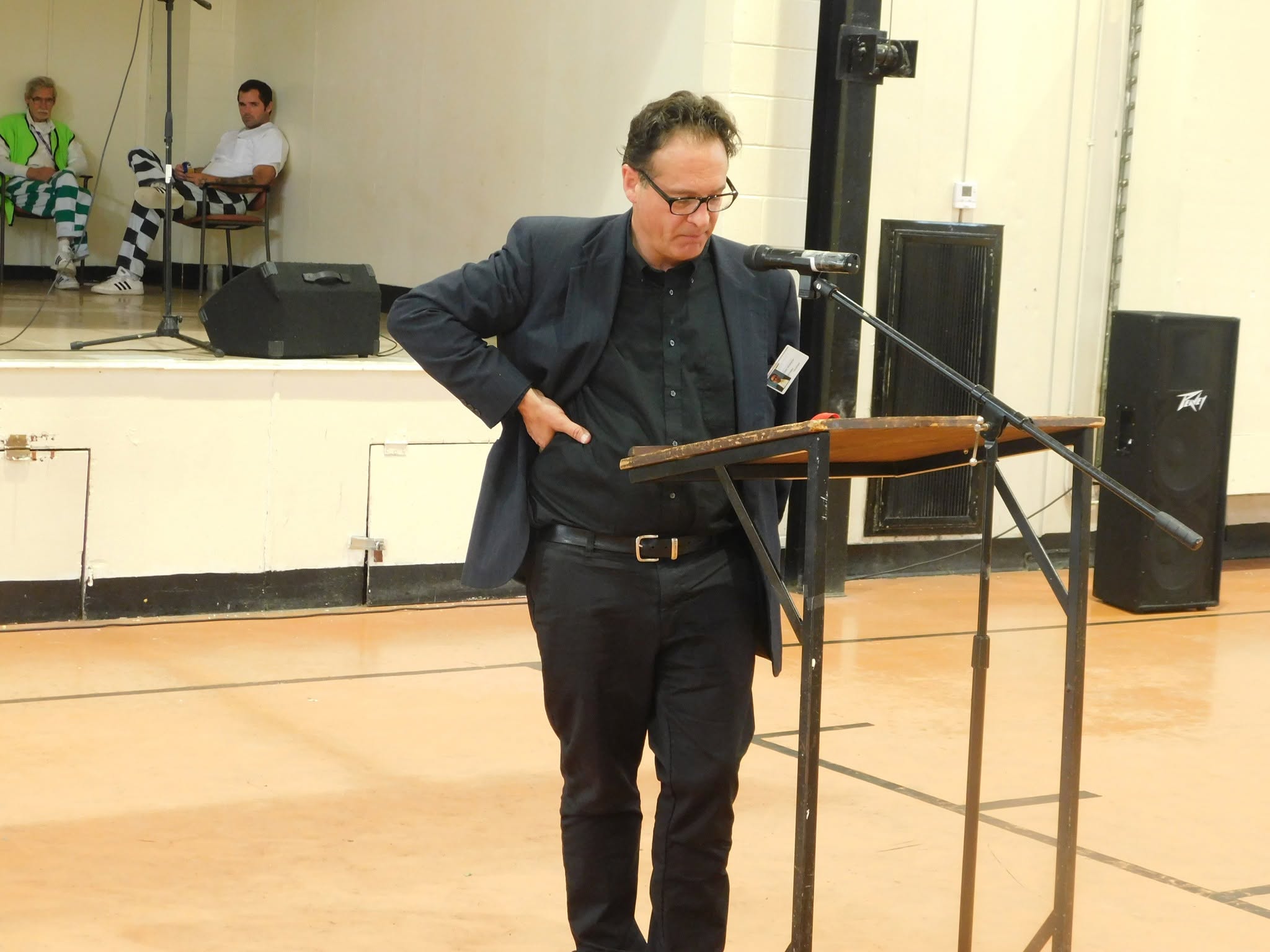
AP Through the Prison Writes Initiative, you have worked with incarcerated writers whose lives and circumstances can be radically different from your own. bell hooks warned against turning marginalized lives into raw material for someone else’s authority. How do you think about the ethics of editing, teaching, and publishing the writing of incarcerated people? Has your understanding of that responsibility changed over the years?
I agree with Hooks on this point. Everything feeds off someone else. Hooks is a tenured professor, she feeds off graduate assistants, interns, all kinds of other people’s labor. Myself as well, but, except briefly, I have never worked for pay. But, yes, nonetheless, it is easy for American liberals to turn the whole prison thing into a fetish. Perhaps what saves me from being them is that I’m not of the MIDDLE CLASS, therefore I don’t necessarily feel a great distance between me and my incarcerated students. Or, at least not as much distance as the tenured class, so to speak.
Only revolt is everlasting, and not much else.