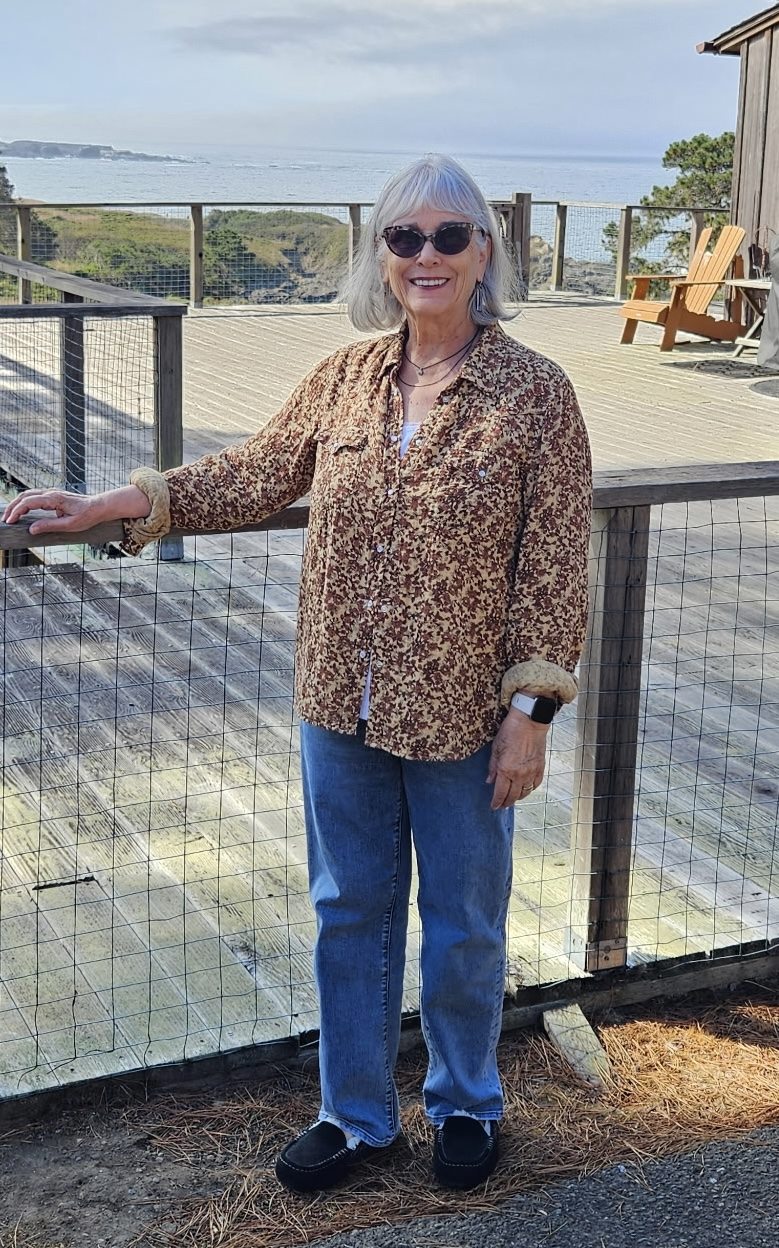
AP You often begin a poem with an extremely concrete detail — a kitchen object, a supermarket product, an ordinary domestic scene — and only gradually allow it to open onto a historical, social, or economic dimension. Walter Benjamin was deeply interested in precisely this capacity of seemingly minor or discarded things to disclose a larger historical reality. Do you think the particular can itself become a form of theory — a way of knowing something that abstraction might actually conceal?
Using concrete images and scenes is an effective way to engage the reader and to draw them into a poem. Overusing abstractions detracts from the overall experience of the poem and typically causes the audience to stop reading as they feel detached. When I write, I am doing so for my community of writers, family, friends, and, if I’m lucky, strangers out in the greater world. I’m communicating and using the objects and settings that are familiar to me and that might form a common understanding with others. I also do not want to sound preachy and clobber anyone with my beliefs, political or otherwise, and my frustrations and fears. The same goes for love and joy; I do not want to cloy or be saccharin sweet so as to insult my subject. To me, using the particular reveals hidden meanings that help connect us to historical and current events, and to each other.
AP There is something striking about the way your poems move between the intimate and the historical. A marriage, a family memory, an aging body, a supermarket aisle can suddenly seem to contain an entire social world. Where does that movement begin for you? Do you start with an image or object and discover its larger implications later, or is the historical dimension already present when you begin writing?
I would say it’s a little of both, but usually I start with an image, which could be a physical setting, an object or creature, a time period in my life, or a current event. Typically, these images are from everyday scenery in my own life, like the bottlebrush tree outside my window with its red bristles and buzzing bees.
AP Marx argued that commodity fetishism makes the social relations behind an object appear as relations between things. Your poems often seem to reverse this process: a commodity, a household object, or a familiar place suddenly becomes charged with the labour, desire, history, and human relations concealed within it. Is poetry, for you, a way of making the social life of objects visible again?
I often use quotidian settings and objects as a foil for the emotions or message I’m trying to get across. The irony is that a lot of the time, I don’t know the so-called message I am trying to communicate, especially when I start writing a poem. More is revealed as I write. Sometimes in the end there is no clear meaning, but rather non sequiturs that ignite feelings.
AP Your poems are often remarkably attentive to ordinary things without treating them as merely “ordinary.” What makes a particular object suddenly become poetically significant for you? Is there a moment when an object stops being background and begins to demand a poem?
Since childhood I’ve had an active imagination and I tend, even in my advanced age, to anthropomorphize inanimate things and living creatures. This just happens without my consciously realizing that I’m doing it. When looking at the physical world around me, I automatically get a sense of emotions and feelings that seem to emanate from all sorts of things like insects, lizards, trees, cats and dogs, just about anything. I realize this is my imagination, all in my head, if I stop to think about what I’m experiencing.
AP Foucault’s genealogical method asks us to look not for a pure origin but for the contingent historical relations, institutions, and forms of power that produce what later appears natural or inevitable. Your family poems seem to do something similar with inheritance, migration, labour, property, and memory. Do you think of genealogy as a way of discovering the structures inside an individual life?
Genealogy definitely impacts an individual’s life. Whether that person is able to discover and become aware of that influence varies. Some people blithely go through life without ever being curious. Some people are inherently selfish. I think many personality traits are inherited, but these traits can be tempered and molded by time and experience. A lot of change depends on how receptive an individual is to outside influences. Some people are just as rigid as the Rock of Gibraltar.
AP At the same time, your poems never seem reducible to sociology. They retain surprise, tenderness, humour, sensuality, and sometimes strangeness. How do you protect the individual life of a poem from becoming merely an illustration of a political argument?
I do not like to sound preachy and try to avoid rants. Most of the time anyway. I probably have a few rants out there. I think I’m pretty successful at avoiding righteousness and preaching. The beauty of poetry is its play with words and sublimation of ideas using simile and metaphor and wonderful tricks of the trade. I like surrealism and absurdism.
AP In “Pop Art Super Market,” the supermarket becomes almost an entire perceptual universe, especially through the child’s experience of it. Could you imagine the supermarket as one of the places where we are taught how to desire — long before we have the vocabulary to think critically about desire? What does a child perceive there that an adult consumer has learned not to see?
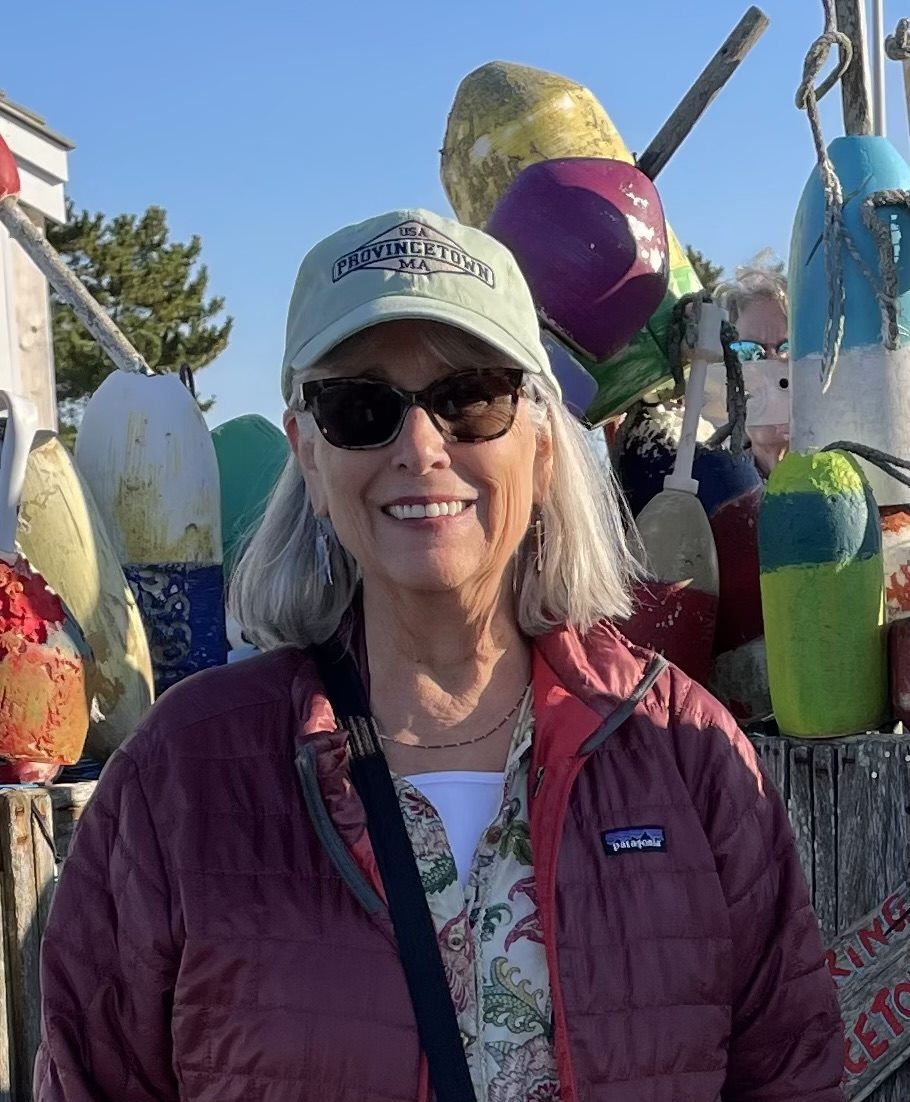
The supermarket, even as its name implies, is a place of sensory overload. My mother tried hard to avoid taking her children with her to shop for groceries. I did the same as a parent. Many times, I had to go with my mother anyway and was told most of the time “No” as I fondled the merchandise. Same with my own children. Even today, in my advanced age, when I go to the supermarket, I study a huge array of foods and packaged goods as I hold them and read their labels and calculate prices. I put a good number of items back because they are impractical, unhealthy, or unaffordable, even in my affluent country. It’s a luxury today to be ignorant of all the underlying costs of our necessities. Children are innocent, little blank slates, who acquire the dreadful knowledge of our world as they become schooled and indoctrinated.
AP Childhood appears in your work not simply as a repository of nostalgia but as a particular way of encountering the world. Do you ever return to childhood in order to recover a form of perception that adulthood has disciplined out of us? Or does writing from childhood inevitably involve reconstructing something that can never be recovered?
I like to see if I can capture, even fleetingly, the feelings of awe I had as a child. I can do it sometimes when I dream or recall a specific event in my childhood, typically when I was with my grandparents, aunts and uncles, sisters, and parents. I also try to remember the feeling of seeing something for the first time as a youngish adult, like when I travelled for my job and first witnessed the Grande-Place of Brussels and I stood there in the immense public plaza and beheld the Baroque guildhalls. I was speechless. I’ve hiked and skied in the Tetons of Wyoming and hiked and camped in Canada, the Pacific and Central Northwest, and the Sierras. Capturing that overwhelming grandeur and those emotions is a puzzle for me because, it goes without saying, words are inadequate. (That’s a not-very-funny joke.) Poetry gives us the means to try anyway.
AP Benjamin understood history as something that can suddenly become legible in the present, when a fragment of the past enters into a new constellation with contemporary experience. Your title Ghost Matinee seems to suggest a similar relation between presence and absence. What does the ghost mean to you? Is it a figure of memory, unresolved history, or perhaps something that remains active precisely because it has not been resolved?
Ghost has a special meaning to me from my childhood when I attended parochial school and I was mystified by the Holy Ghost as I was taught about the Trinity. Today I am agnostic and would be considered heretical but the early childhood influences of the church still have a hold on me, especially in imagery and I suppose my world view. For me, the ghost represents the elusive, fleeting nature of memory and the past. Every moment immediately becomes part of the past, and that has always fascinated me. Trying to recreate what just happened can be like swatting at rainbows cast from a prism.
AP There is very little nostalgia in your treatment of the past, even when the poems are deeply tender toward it. How do you distinguish remembering a world with love from romanticizing the social conditions that produced it?
I seek my own sense of truth and that does not allow for romanticizing and becoming sentimental about the past. Sometimes that’s a quandary. Actually, the older one gets, the more challenging this becomes as knowledge and awareness of the world increases to a deafening pitch and the cruelty is painfully obvious. I am still overcome by the beauty, especially in nature and art, that defies suffering and ugliness.
AP Your poems frequently move between generations: parents, children, ancestors, and the speaker seem to occupy the same imaginative space. Does writing allow you to experience family time differently from ordinary chronological time? Can the poem make generations coexist in a way that ordinary historical narrative cannot?
This question made me think of something that I tell myself every now and then: if I linger on death’s door, say with an illness or injury, and I know I’m close to leaving this world, I think I will convince myself that heaven exists and that I will see all my relatives and friends and pets there. My rational mind knows this is hogwash, but I just might avail myself of this myth to ease out of my earthly existence. Family time, or tribe time, does seem in its own way to transpire on a different continuum than the rest of history. Yes, tribe time would include all the humans we have a bond with, and when we are together, if we are lucky, the rest of the world can become distant as if heard through a tin can.
AP What happens to the idea of family when you place it beside labour, migration, money, housing, illness, and property? Do you think of the family as a private space that exists outside political economy, or as one of the places where political and economic forces become most intimate?
For me, this question is paradoxical because while I feel that family exists outside of political views and economic standing, family is profoundly affected by these forces. I worked my whole life and had a strong drive to work after marrying and having children. My belief was that I couldn’t be a stay-at-home-mom, that this would be wrong. I couldn’t imagine doing anything other than keeping a job. I didn’t trust that my husband would be okay with me not working outside the home. Our children suffered and it was a struggle that I wonder today how we ever made it through. I am also acutely aware of class struggle, racism, inequality, privilege; the whole spectrum of haves and have-nots. My children cannot attain the standard of living that my husband and I worked hard to achieve. Owning a home has become impossible and more families are forced to rent at exorbitant cost, commute long distances, live in tiny spaces, and scrimp with meals; if they are lucky.
AP Bergson distinguished measurable, homogeneous clock time from durée, lived time that unfolds qualitatively rather than simply accumulating as units. Your poems often move non-linearly through memory and experience. Is this movement a conscious resistance to chronological time, or is non-linear time simply closer to the way memory actually behaves?
I think that for most people time is non-linear. I wonder if I am just making an uneducated guess because this seems so normal to me. Most of the time I have difficulty remembering very personal events in a chronological order. I think the more charged a memory is with emotion, the more difficult it is to confine it to a specific time period.
AP When you revise a poem, what are you listening for? Do you primarily work through sound and rhythm, through images, through conceptual structure, or through some combination that is difficult to name?
Sound and rhythm are important to me so, when I revise, I like to see if there are internal rhymes I can add. I work on rhythm. I also tune my descriptions and imagery to be more specific and detailed. Sometimes I like to see if I can impose a formal structure on the rough draft; if I can mold it into a sonnet or even a pantoum. Revising can go on for years for some poems. Rarely do I just sit down and write a poem and say I’m finished. There is no better feeling than when words tumble out and you can’t even keep up.
AP Judith Butler has written extensively about bodily vulnerability and our fundamental dependence upon other people and social conditions. In your poems about illness, aging, and the body, vulnerability often seems less like a private weakness than a way of becoming aware of one’s relation to others. Has writing about the body changed your understanding of what it means to be an individual?
When I returned to writing poetry after a long hiatus due to marriage, parenting, jobs, and the whole catastrophe, I was recovering from two sudden shocking health challenges. One involved three months of having to keep my head bowed and still because of a retinal detachment, and the other involved chemotherapy and radiation. I had to take time off from work for over a year during that time, and when I was well enough, I became obsessed with poetry. I wrote furiously, seeing with my one good eye while lying in bed in cramped positions. I submitted to a contest judged by Charles Simic and won first place. This buoyed me and from then on, I gradually became more and more active in the poetry community in the greater San Francisco Bay Area.
AP The body in your poetry is never simply an abstract philosophical body. It gets tired, ages, becomes ill, desires, remembers, and occupies particular rooms and places. How important is the physical world of the body — its limitations, sensations, embarrassments, pleasures — to the way a poem begins for you?
The body and how we handle its limitations and sensations is not something that I purposely think of when starting a poem. These things crop up during the process and sometimes become a main focus, typically with my own sense of dark humor and wonder.
AP Levinas placed the encounter with the Other at the beginning of ethics, emphasizing the irreducibility of another person to our own categories and interpretations. When you write about someone who is ill, aging, lost, or absent, do you feel a responsibility not to make that person too easily available to your own language?
Our shared humanity is a conscious theme in my poems, or at least it forms the background of my own existence. It’s mystifying to me what other people are thinking and who they are inside; nevertheless, I feel a kinship with a broad range of people of this world, especially when they inadvertently share their vulnerabilities and self-awareness. While I do feel responsibility towards people and community, I don’t consciously think of this when I’m writing. I think it is just in my nature to be a social creature with a degree of selflessness. This is probably something in my DNA that has been reinforced by my upbringing and circumstances of my life.
AP Your poems about other people often seem to resist the temptation to turn them into symbols. What does it mean, for you, to write about a real person without pretending that the poem can fully know or contain them?
It is impossible for me to impose on others or project onto them my own beliefs and feelings. If I thought I had the power to do that, I would be kidding myself; I’d be delusional. However, when I am writing a fictitious persona poem, I attempt to stay in my subject’s personality as I understand it through historical events. The mystery remains: what were they really thinking?
AP Adorno worried about the possibility that aesthetic beauty might reconcile us too easily with historical suffering — that art could make contradictions appear harmonious when they should remain disturbing. Your poems can be beautiful even when they deal with illness, loss, inequality, or historical violence. Do you ever feel a tension between making something beautiful and remaining faithful to what should not be made comfortable?
I abhor revisionist history in which truth has been buried in order to make horrific events and cruelty disappear so some current regime can boast about how perfect the past was. It’s difficult and somewhat draining to write about uncomfortable things, especially violence and cruelty. So, I do feel a tension that I try to overcome by not being heavy-handed, but instead by dealing with the subject in doses that are manageable for me. This doesn’t always work well and I have a lot of crumpled paper. I hardly ever actually delete my computer files because scraps can be useful later.
AP If poetry cannot by itself abolish exploitation, inequality, ecological destruction, or the unequal distribution of power, what do you think it can actually change? Can it redistribute attention, alter what we perceive as ordinary, make hidden forms of labour visible, complicate the language of power — or perhaps change the reader’s sense of what kinds of lives are possible?
It’s unfortunate for humanity that poetry can’t abolish exploitation, inequality, ecological destruction, or the unequal distribution of power! Wouldn’t that be great? All I can hope for is that a reader will have an “aha moment” or small epiphany and that this will broaden their perspective.
AP There is a remarkable political intelligence in the way your poems move between private experience and larger structures without announcing themselves as political poems. Do you think a poem has to declare its politics in order to be political? Can changing the reader’s perception of an ordinary object, relationship, or form of labour already constitute a political act?
When a poem declares its politics, I fear at least half of the readership will be lost. Possibly even those who share in the political view will be turned off. The trick is to subtly embed messages, or to abandon any conscious message and just go with the flow. My poetry seems not to be able to help itself from veering into quandaries that deal with life and politics.
AP Much contemporary political poetry is explicitly declarative: it tells the reader what is unjust and what position they should take. Your work often operates differently, allowing contradiction and ambiguity to remain active inside the poem. What makes a political poem persuasive to you? Is there a point at which political certainty begins to weaken rather than strengthen poetry?
Going back to the idea of shared humanity, if you can nudge people in the direction of critical thinking and questioning, I think that is much more effective than outright declaration and argument. Humankind is full of contradiction and ambiguity. Much of the most destructive behaviors happen in righteous conviction and closed mindedness.
AP The political left often speaks about collective structures — class, labour, capital, ecology — while poetry inevitably begins from singular experience. Do you see poetry as a place where the collective can become perceptible without sacrificing the irreducibility of the individual?
I think it is a challenge for poetry to assume some sort of collective voice. Shared personal experiences and viewpoints seem to be more compelling to an audience that troubles itself to read poetry, and in that way sometimes political points can be disguised.
AP Your poems repeatedly return to work: paid work, domestic labour, care, consumption, the labour embedded in objects. What forms of labour remain most invisible to contemporary culture? And what can poetry reveal about work that economic statistics or political discourse cannot?
I’m concerned that poetry should not just exist in the domain of academia. I don’t have an MFA, for example, and while I would have loved to have studied in some illustrious program, I never had the means and time. I would have had to take on debt and hurt my family; it has not been practical for me. I worry that too much poetry exists outside of everyday work of all sorts, marriage, raising children, and just mundane routines. I’ve been drawn to poets that write about work like Philip Levine, Joseph Millar, Langston Hughes, of course Walt Whitman, Dian Seuss, and Lynn Emanuel, to name a few. Coincidentally, many of these poets are teachers. So much for my fear of academia. I’ve always contradicted myself in that I’ve been proud of my working career but I’ve also wished I had advanced degrees under my belt.
AP One of the pleasures of your work is the way a poem can suddenly change scale: a small domestic detail becomes historical, a family memory becomes political, an object opens onto an entire economy. Is this change of scale something you consciously construct, or is it part of the discovery process of writing?
When I begin, I may start with a small detail, but the writing process is a journey that opens up to a larger vista once I get going. Revising reveals more. It takes a lot of time and concentration for me to work on my poems and let them unfold. I have belonged to several poetry groups over the past twenty-plus years. My fellow poets contribute so much as we critique each other’s poems, arguing over line breaks, punctuation, killing our darlings, etc. I have one particular mentor, Thomas Centolella, who I’ve met with in a group for many years. I’ve been able to attend many workshops with famous poets. There are several other groups of poets I meet with regularly, including a free writing session where we bring prompts. I am also a member of several poetry centers and organizations so I feel a strong connection to the poetry community in the San Francisco Bay Area. The indie press that has published my work, Unsolicited Press out of Portland, Oregon, is another source of community. I’ve bonded with other authors there and I love what the press stands for.
AP Do you have a sense that certain poems are waiting for you before you write them? Or does the poem become itself only through the process of composition, so that you cannot really know what it is about until it has acquired its final form?
There are definitely topics queued up that I want to write about. Poems can’t be forced to cooperate with my chosen subject, though. Many times, the more I try to write about a specific thing or event, the more I end up staring at a blank page. As I write about one thing, the poem has a tendency to dictate something else, orthogonal to what I start out with. The process of writing the poem reveals more, like peeling away the skins of an onion as the saying goes.
AP What role does pleasure play in your political and social imagination? Contemporary progressive discourse can sometimes treat pleasure, beauty, or sensuality with suspicion, as though seriousness requires austerity. Your poetry seems to suggest that pleasure itself can be a form of knowledge. Do you see pleasure as politically significant?
Yes, I rage against the schoolmarm’s view of pleasure. That sure is misogynistic of me to say because males have played an even bigger role in preaching self-denial. America was founded on Puritanical principles and we still feel the consequences. Pleasure is closely related to freedom, as freedom gives us rights to choose and, therefore, enables us to pursue our various desires. Self-awareness fosters knowing what one desires, beyond our animal instincts.
AP Your work is attentive to tenderness without becoming sentimental. Is tenderness something you deliberately cultivate in a poem, or does it emerge when the poem allows a person or object to remain more complicated than the categories through which we normally understand it?
I think that tenderness emerges in the poem as I write and revise and become more aware of my inner feelings. Even when baffled by behavior or circumstance, there can be an underlying sense of love, a sense of spiritual agape. I feel this for humanity, the planet, flora and fauna. I am agnostic, verging on atheistic, but I am awed by the unknowable.
AP You write frequently about America, but the America of your poems is not simply a geographical setting. It is also a system of habits, commodities, infrastructures, memories, inequalities, and desires. How conscious are you of writing against the dominant images through which America represents itself to itself?
I think I am keenly aware of what I believe is the true America, the true USA, in its self-contradictory descriptions, teachings, advertisements, and the constant harangue that it is the greatest country in the world. I have an innate love of my country but that does not preclude my having criticisms. As I’ve mentioned before, I eschew the rant.
AP When you think about the future in your poetry, do you imagine an alternative social order, or are you more interested in preserving the possibility that the present could become something other than what it currently appears to be?
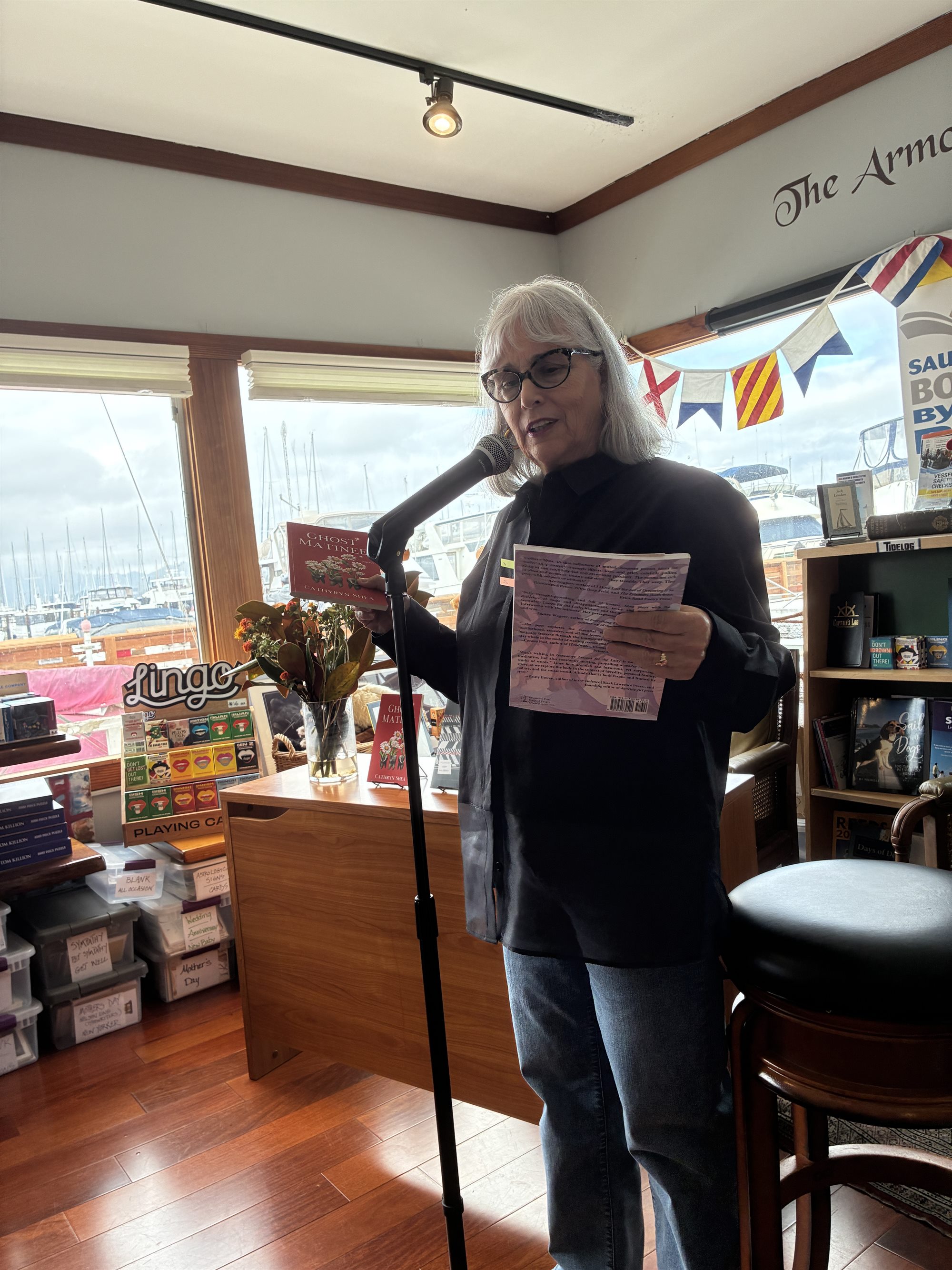
In one of my poems, “Unpaid Debt,” in Ghost Matinee, I end with:
Better to fool myself and reverse
what I imagine to be true:
the past is a frontier, the future a sanctuary.
I’m trying to imagine that we can still find solutions for some of the existential harm we humans have caused. I’m not thinking of utopia, but rather a harnessing of our shared intelligence and conscience to, yes, help the world become something other than what it currently appears to be. In my own self-awareness, sometimes I find it difficult to be idealistic and hopeful.
AP Bloch’s idea of the “Not-Yet” describes unrealized possibilities that are nevertheless latent within the present. You sometimes write about the future in spatial terms, even as a kind of “sanctuary.” Is hope for you something already materially present in the world, however incompletely, or does poetry have to invent the possibility before it can become imaginable?
I seem to intrinsically be an optimist more than half the time. Even when I feel like all is lost, there’s a kernel of hope that buoys my spirits. One of the great benefits of my marriage is that my mate is there as a calming influence. In simple terms, I want the future to continue to hold good possibilities for the people who come after me. The potential exists, I still believe.
AP Finally, what do you think happens in the moment when a private experience becomes a poem and therefore becomes available to strangers? Something that belonged to one person’s memory suddenly enters a shared space. Do you think of that transformation primarily as an act of communication, an act of discovery, an act of making, or even an act of political redistribution?
My usual thought about my poetry, even my published poems and books, is that nobody is really reading them. I’m so obscure. Talk about the unknown! This gives me a tremendous sense of freedom in a way. I’m amazed when someone notices what I’ve written. Even close friends and family do not read everything at all. The most intimate sharing happens in my small poetry groups that I meet with regularly. I am, in fact, communicating with some broad audience in my head when I write my poetry, and I wish more people would read my work. In that way, I’m certainly not unlike most poets I know.